The Female Side of Autism: Sexual Dichotomies impacting the Helsmoortel-Van der Aa syndrome pathology. At a recent conference in Troina, our group presented new work entitled “The Female Side of Autism: Sexual Dichotomies impacting the Helsmoortel-Van der Aa syndrome pathology.” The study focuses on sex-specific differences in Helsmoortel–Van der Aa syndrome (HVDAS), a rare neurodevelopmental disorder caused by pathogenic variants in the ADNP gene. While HVDAS is characterised by substantial phenotypic variability, the contribution of biological sex to this variability remains poorly understood. Our work addresses this gap by dissecting behavioural and molecular differences between male and female Adnp heterozygous (HET) mice, while simultaneously exploring therapeutic responses.
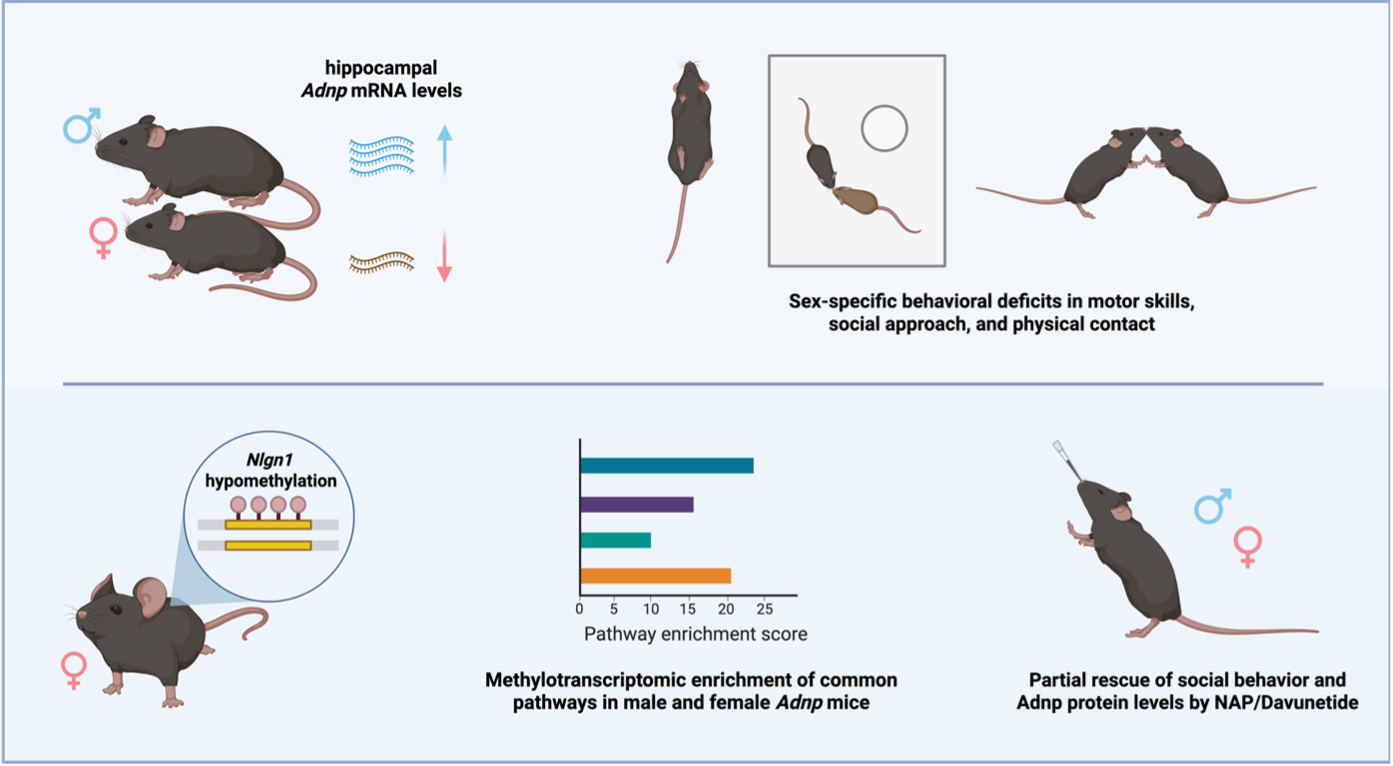
A central component of this work was the use of our Live Mouse Tracker (LMT) platform, a powerful automated behavioural phenotyping system developed and implemented at the University of Antwerp. The LMT platform enables continuous and highly sensitive monitoring of individual and social behaviours in group-housed mice, allowing us to detect robust and subtle behavioural alterations in HET mice that would be difficult to capture with conventional behavioural assays. Using this platform, we identified core social impairments in both sexes, but with different manifestations: male Adnp HET mice showed deficits in social initiation and stereotyped interactions, whereas female mice displayed more pronounced social withdrawal and altered group preference.
Importantly, the Live Mouse Tracker platform also allowed us to move beyond phenotyping and into real-time therapeutic screening. In this study, we used the system to evaluate the effects of chronic treatment with NAP/Davunetide, an ADNP-derived peptide with neuroprotective potential. Our data indicate that NAP can partially correct social behavioural abnormalities in Adnp HET mice, with sex-specific differences in treatment response. This provides further support for the value of LMT as a translational platform not only for behavioural characterisation, but also for preclinical drug screening in neurodevelopmental disease models.
At the molecular level, the study combined behavioural profiling with methylation and transcriptomic analyses, revealing that most of the observed biological variance is driven by genotype, while sex nonetheless modulates specific behavioural and transcriptomic outcomes. Together, these findings emphasise the importance of incorporating sex as a biological variable in ADNP research and highlight the added value of integrative mouse phenotyping platforms in translational neurogenetics.