Genetics is the study of the hereditary material DNA. This involves examining our DNA to see if there are any abnormalities that are associated with certain diseases or conditions. For example, genetic research can be used to determine if someone is a carrier of an inherited disease, or to determine which treatment works best for a particular form of cancer.
Genetic research can be performed in various ways, such as by taking blood or saliva samples and analyzing the DNA within them. Embryos or amniotic fluid can also be examined to see if there are any genetic abnormalities present.
The goal of genetic research is to gain more insight into how certain diseases and conditions arise and how they can be treated. It can also help predict the risk of certain diseases and can be used to investigate potential inherited risks in family members of patients.
- Chromosomes
- DNA
- Gene to protein
- Genetic variant
- Inheritance
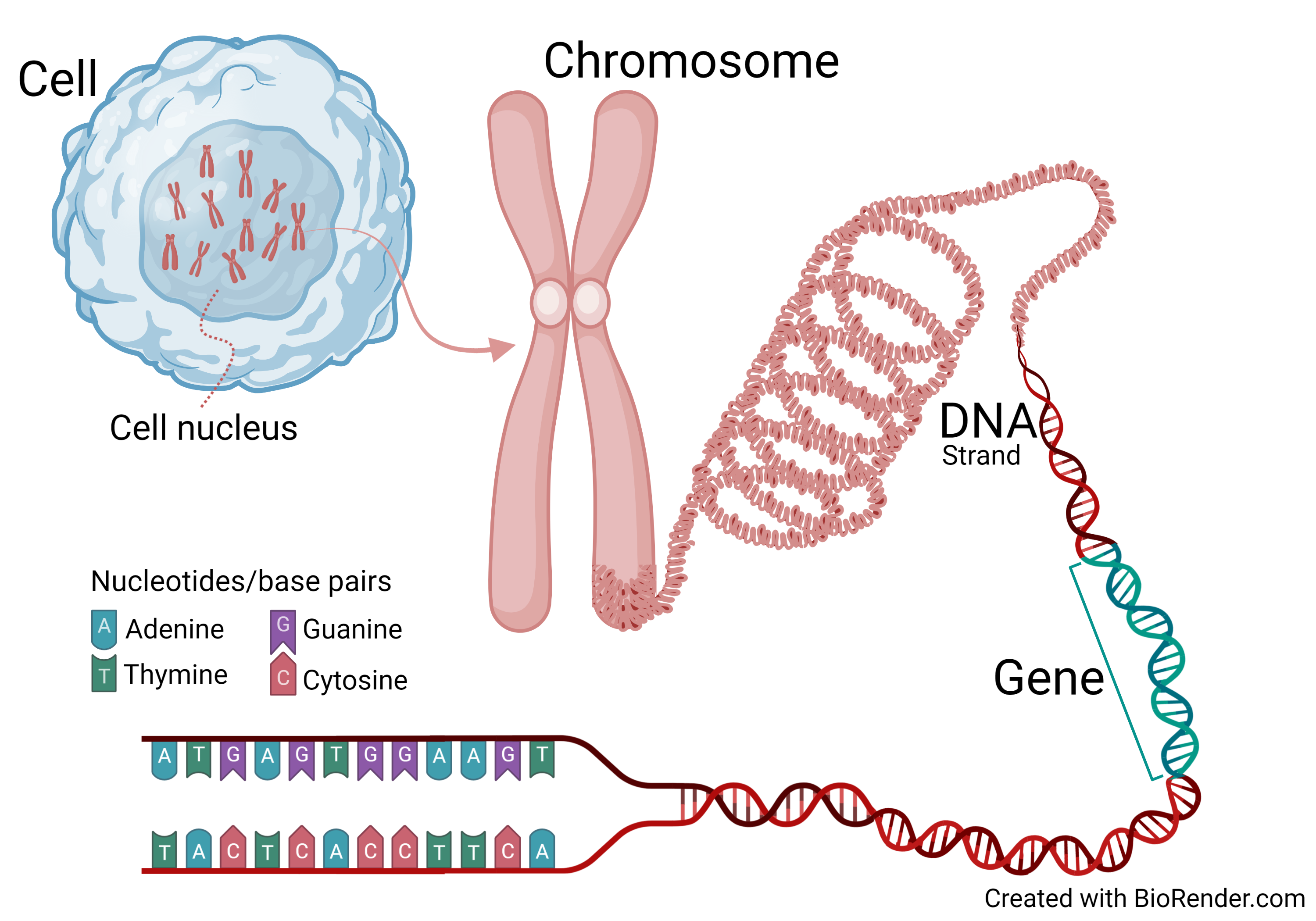
A chromosome is a long, thin structure consisting of a folded DNA molecule. Chromosomes are found in the nucleus of cells, each cell contains 23 pairs of chromosomes, which means that there are 46 chromosomes present in every cell. You inherit one chromosome from your mother and one from your father for each chromosome.
Each time a cell divides, the DNA in the chromosomes is copied, so that the new cells contain the same genetic information as the original cell. This ensures that our body grows, develops, and functions properly.
We can also detect certain chromosome abnormalities or deviations that may be associated with certain diseases or conditions by looking at chromosomes using a karyotype. A karyotype is an image of all the chromosomes in a cell, arranged in pairs based on size, shape, and the way they color. A change in the number or structure of chromosomes can indicate a genetic abnormality, such as Down syndrome.
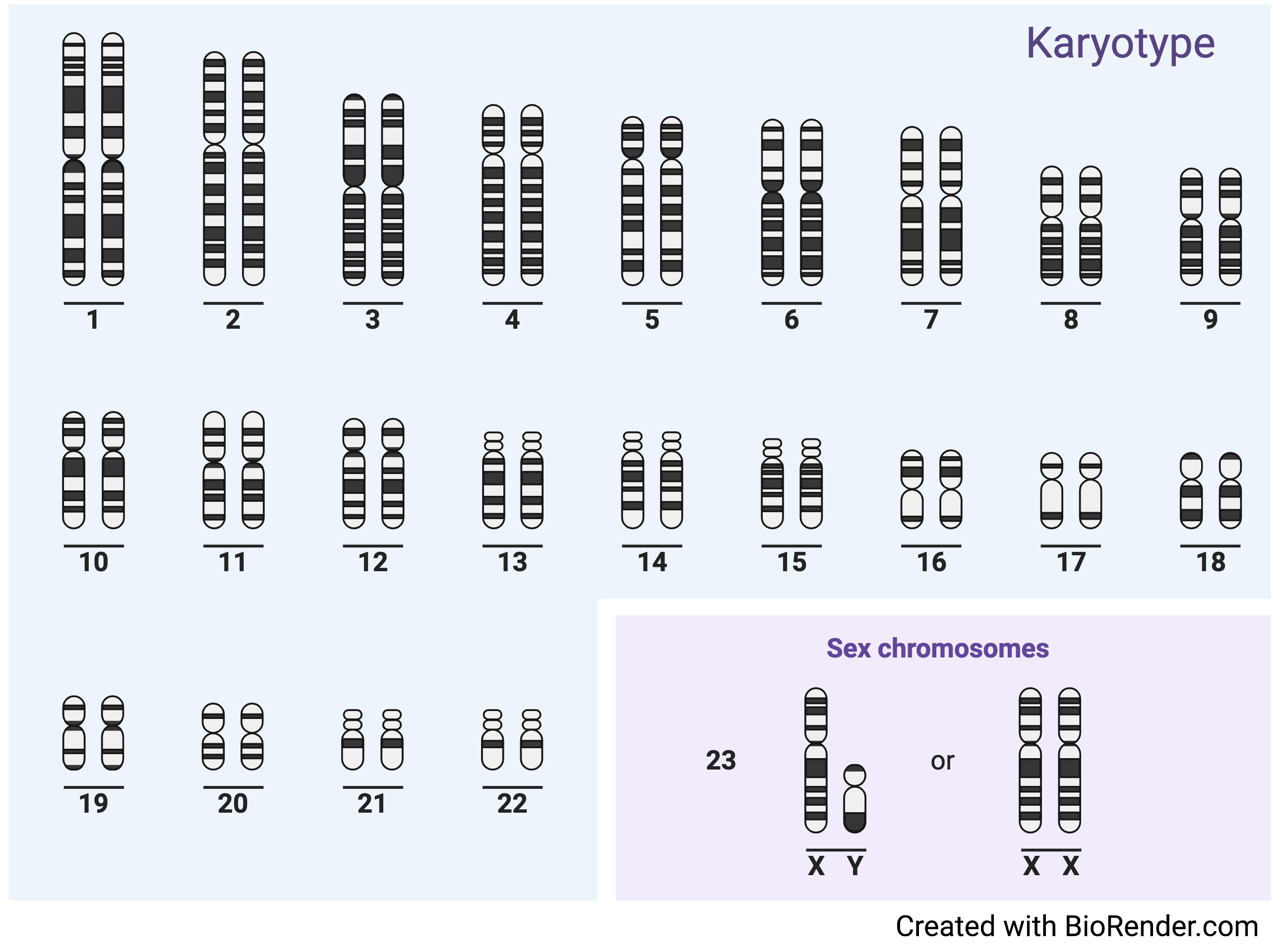
DNA is coiled up like a very long thread in all of our cells as a chromosome. DNA stands for Deoxyribonucleic acid, and it is a molecule that contains the genetic information necessary for the functioning and development of all known organisms on Earth.
DNA is made up of four different building blocks called nucleotides, which repeat to form a long, spiral-shaped structure known as a double helix. The four different nucleotides are Adenine (A), Thymine (T), Guanine (G), and Cytosine (C). The nucleotides occur in pairs, A with T and G with C, hence they are also called base pairs. RNA differs from DNA in that the nucleotide Thymine (T) is replaced by Uracil (U) in RNA.
The sequence of these nucleotides along the DNA strand determines the genetic code, which contains the information for the synthesis of all proteins and other molecules required for the functioning and development of organisms. Techniques such as Sanger sequencing and Next Generation Sequencing (NGS) enable us to examine and investigate this genetic code.
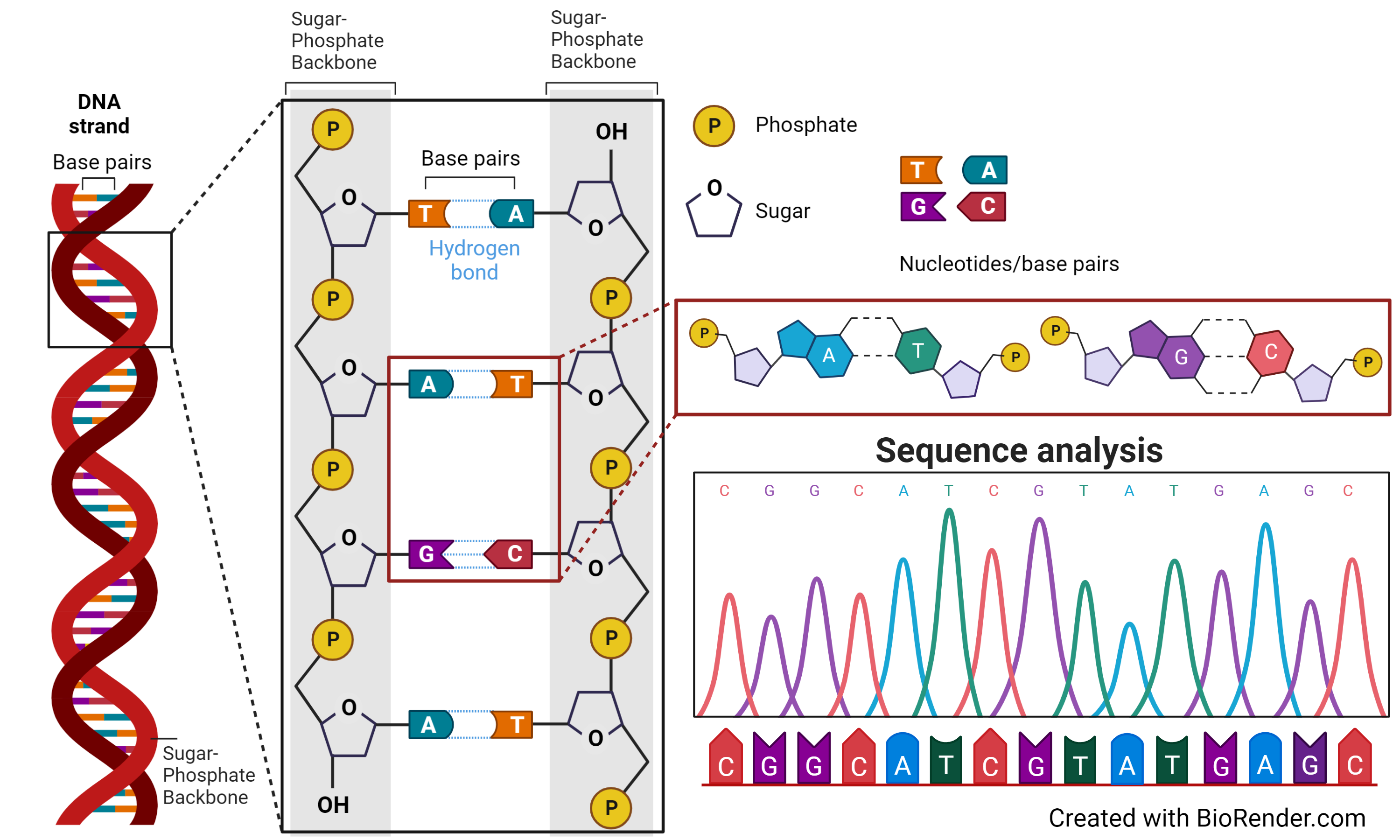
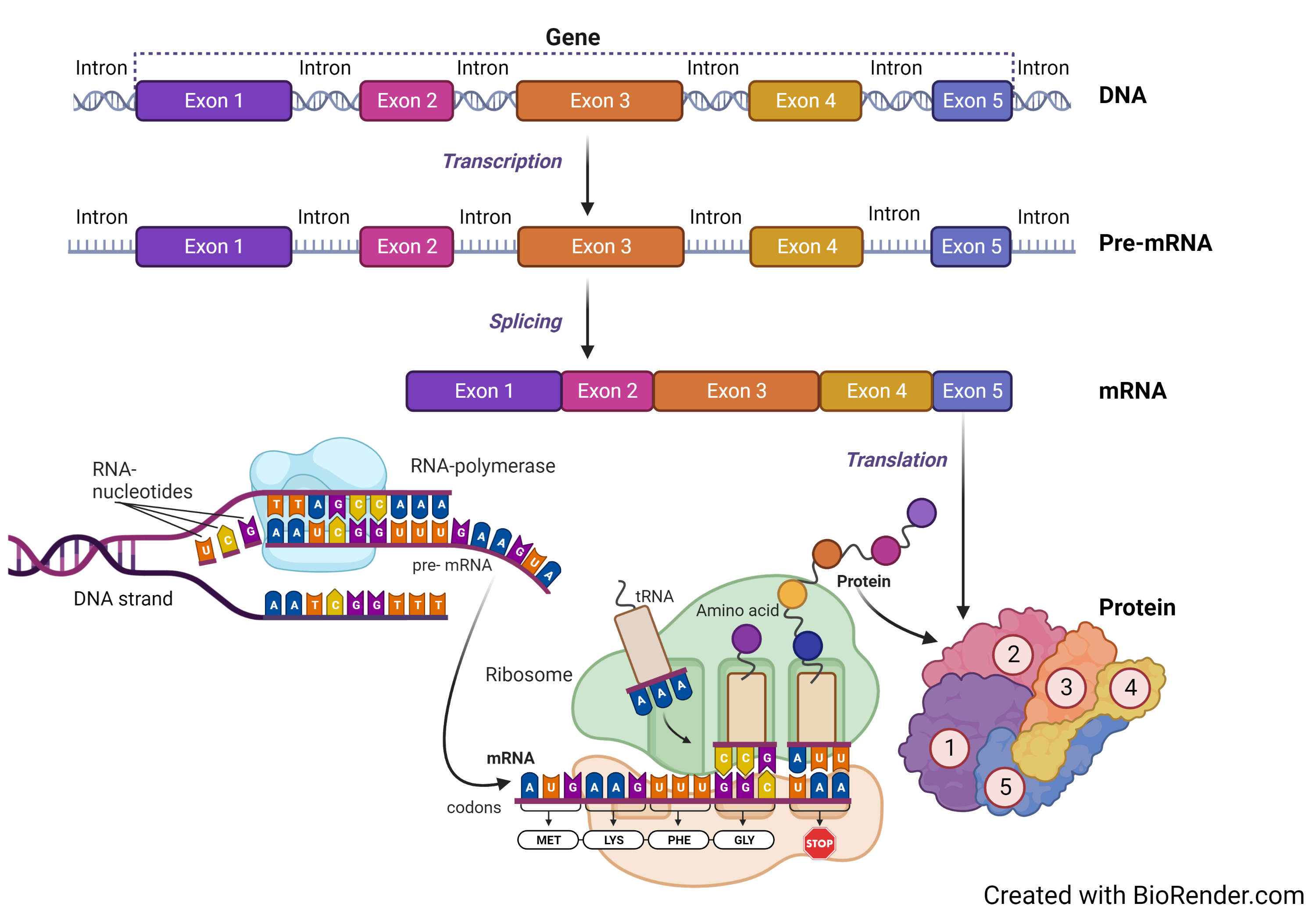
A gene is a specific segment of DNA that can code for a physical/functional aspect of an inherited trait. Genes consist of a particular sequence of nucleotides, which contain the instructions for the production of proteins. Proteins are important building blocks for our body and are necessary for various processes such as growth and metabolism, and are also responsible for specific traits such as eye color, hair type, or height.
To go from DNA to the necessary proteins, the following steps take place:
Transcription: The process in which the genetic information in the gene is copied to another molecule called pre-mRNA. This process takes place in the nucleus of a cell and is carried out by an enzyme called RNA polymerase. During this process, the Thymine (T) molecule is changed into a Uracil (U) molecule.
Splicing: The process in which certain parts of the RNA molecule that are not necessary for the production of a protein (introns), are removed. The remaining parts (exons) form a shorter messenger RNA molecule (mRNA). This contains the necessary information for the formation of the proteins.
Translation: The process in which the mRNA molecule is translated into a protein molecule. This process takes place in the cytoplasm of a cell and is carried out by special molecules called ribosomes with the help of tRNA. During translation, the mRNA molecule is read by ribosomes, which use the information to link the amino acids together in the correct order and produce the protein.
The ribosomes read the mRNA in groups of three consecutive nucleotides (e.g. 'CTA' or 'GGA' or 'AAG'). This is called a codon and is translated into an amino acid. Translation always begins at the start codon: AUG. This is the first codon read in every translation process. The start codon AUG codes for the amino acid Methionine. When a ribosome reaches a stop codon, translation is terminated, and the protein is released. The stop codon consists of a sequence of three specific nucleotides that indicate the end of protein production. There are three stop codons: UAA, UAG, and UGA.Together our DNA consists of about 20.000 genes in total. So far, we only know the role of about a quarter of them in certain conditions.
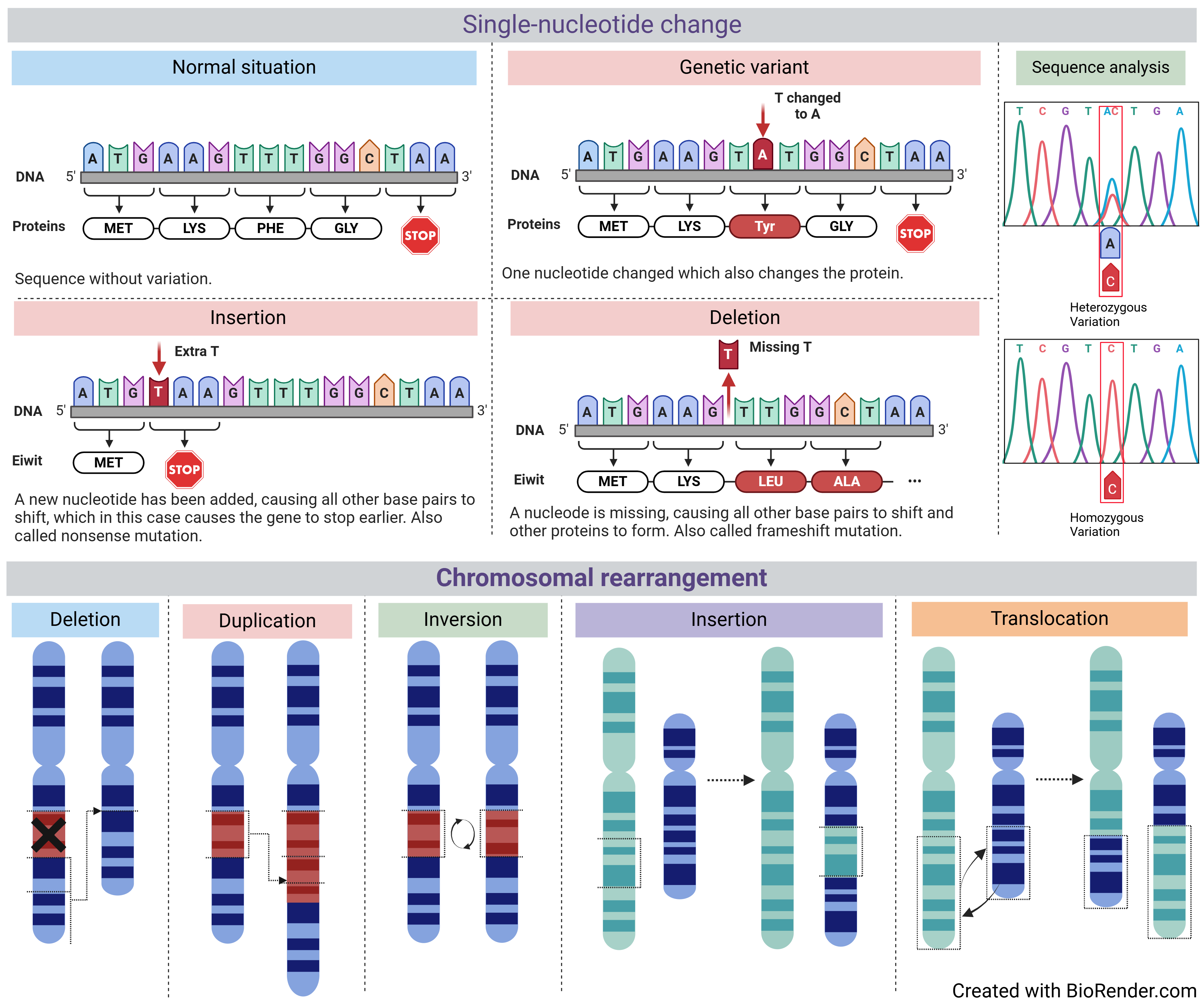
A genetic variant is a change in the DNA molecule that can occur during cell division or as a result of exposure to certain substances, such as radiation or chemicals. DNA is the building block of our genetic information, so when a variant occurs, it can cause changes in our genetic code. This can affect the way proteins are produced and can lead to changes in our traits. Sometimes, variants can lead to inherited diseases or conditions, but in other cases, they may have no effect or only minimal effects on our body.
Variants can vary in size and can occur within a single gene or at the chromosomal level. When we look at variations within genes, we refer to point mutations, which are changes in a single nucleotide within a gene. When the changes are more extensive and affect multiple genes, we refer to chromosomal rearrangements.
Inheritance is the process by which genetic information is passed down from parents to children. Each parent passes on a part of their genetic information to their children, which determines our traits such as hair color, eye color, height, and risk of certain diseases.
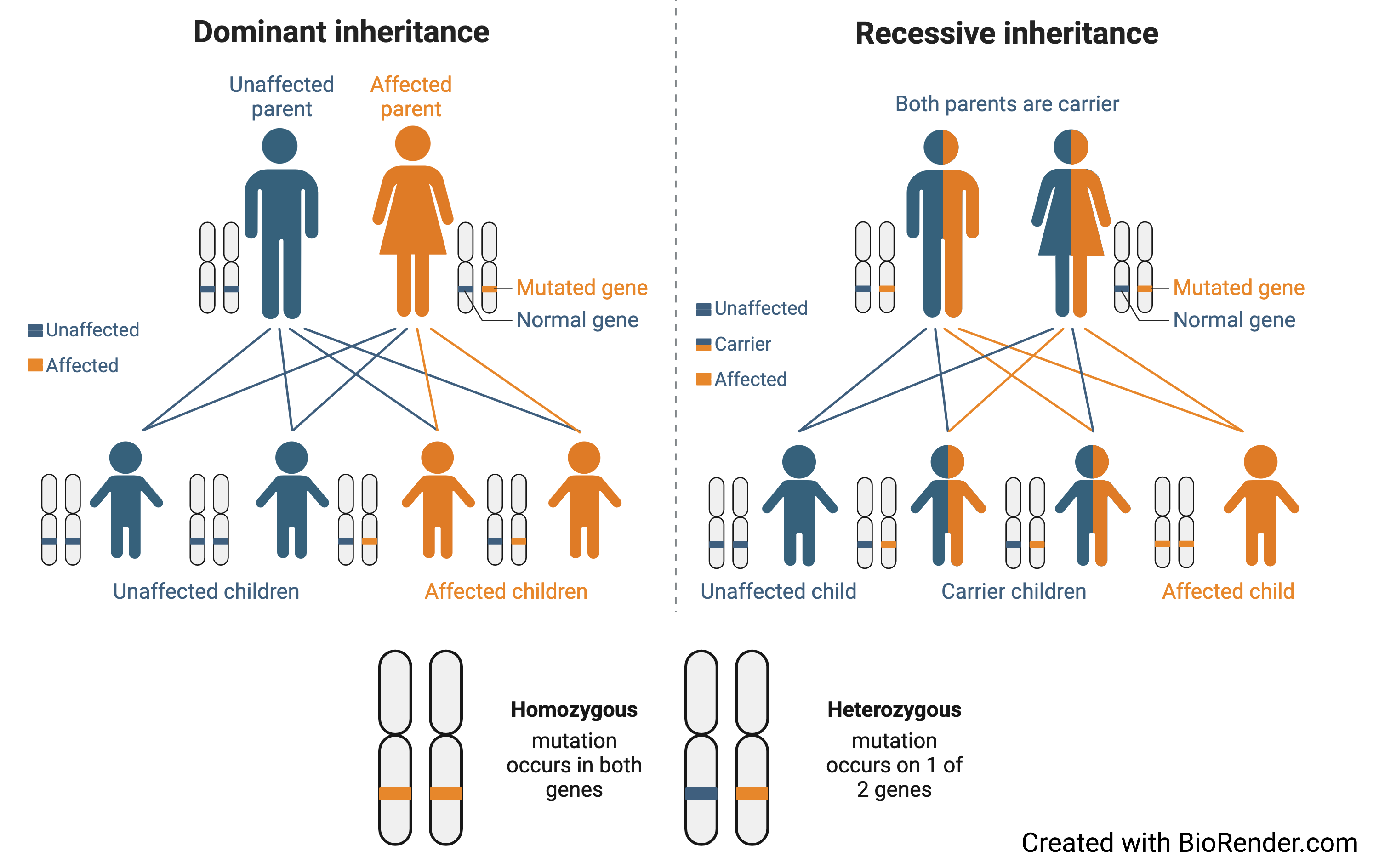
Our genetic information is stored in our chromosomes. If both parents pass on a copy of the same gene, it is called homozygous. If the parents pass on different versions of the same gene, it is called heterozygous.
There are different patterns of inheritance. In dominant inheritance, a disease-causing gene is dominant and the disease is passed down from a parent with the disease to about 50% of their children. In recessive inheritance, the disease-causing gene is recessive and both parents must be carriers to pass on the disease to their children. In sex-linked inheritance, genes located on the X or Y chromosome are passed down from parent to child and there are different patterns of inheritance depending on whether the gene is on the X or Y chromosome.